At kin•dom Camp, LGBTQIA+ Youth Find a Place to Belong
Many words describe spaces created for LGBTQIA+ people: safe, accepting, affirming, inclusive. At kin•dom community, they prefer two others: belonging and celebration.

Many words describe spaces created for LGBTQIA+ people: safe, accepting, affirming, inclusive. At kin•dom community, they prefer two others: belonging and celebration.
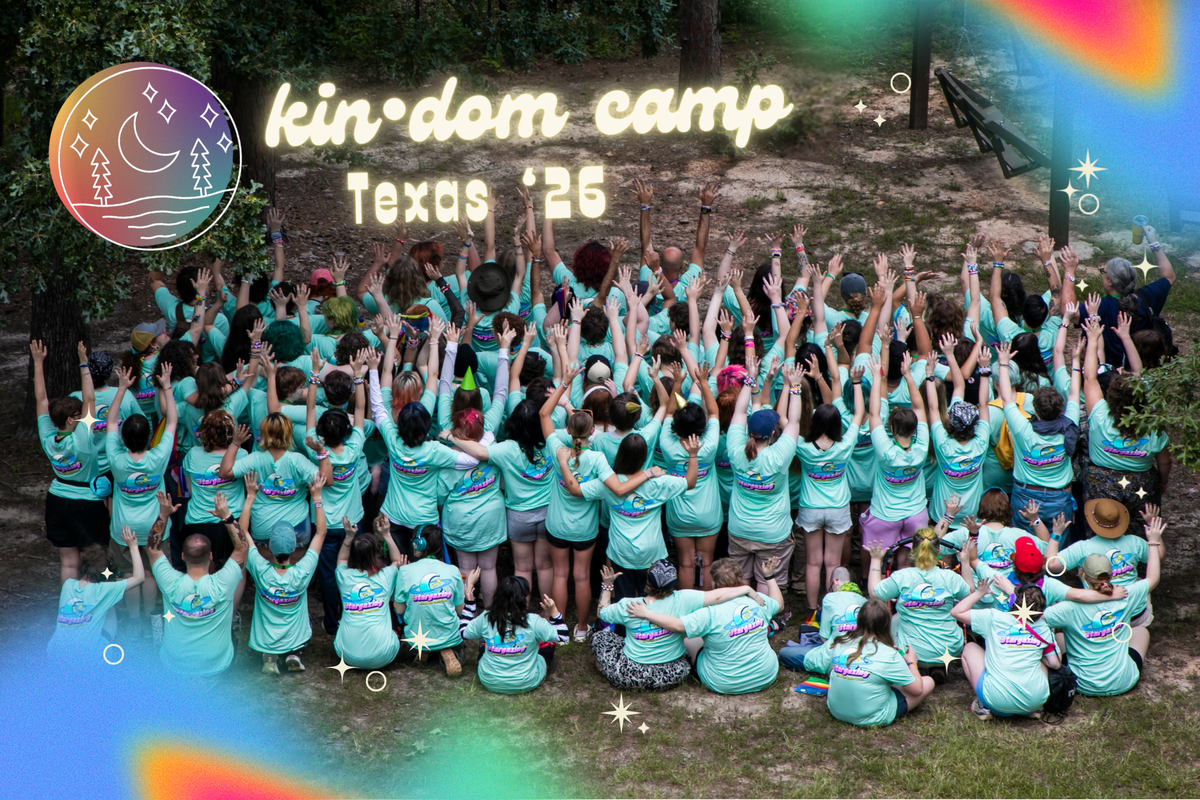
“The mission of kin•dom community is to create space for queer belonging and celebration,” said Dr. John Leedy. “The way our mission takes shape in the world is through our kin•dom camp program.” Originally founded in 2020, kin•dom community is now its own 501(c)(3) nonprofit organization. Its camp program, launched in 2022, gives LGBTQIA+ youth ages 11 to 17 an opportunity to feel safe and free to show up as their full selves while experiencing the relationships, support, and growth that can happen during a weeklong residential summer camp. Today, kin•dom hosts three weeklong camps—one in East Texas, one outside Chicago, and one on Lake Tahoe in Nevada.
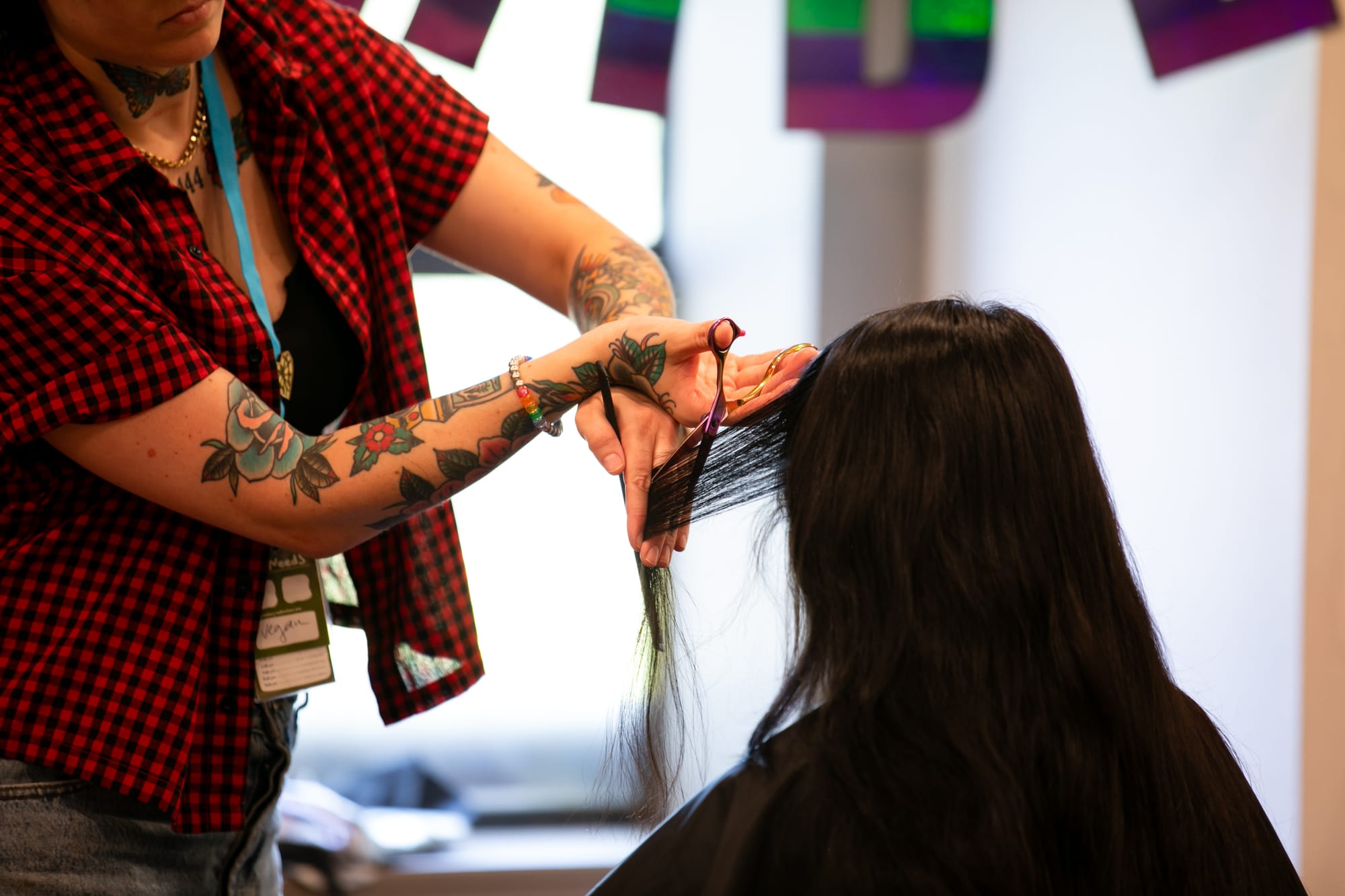
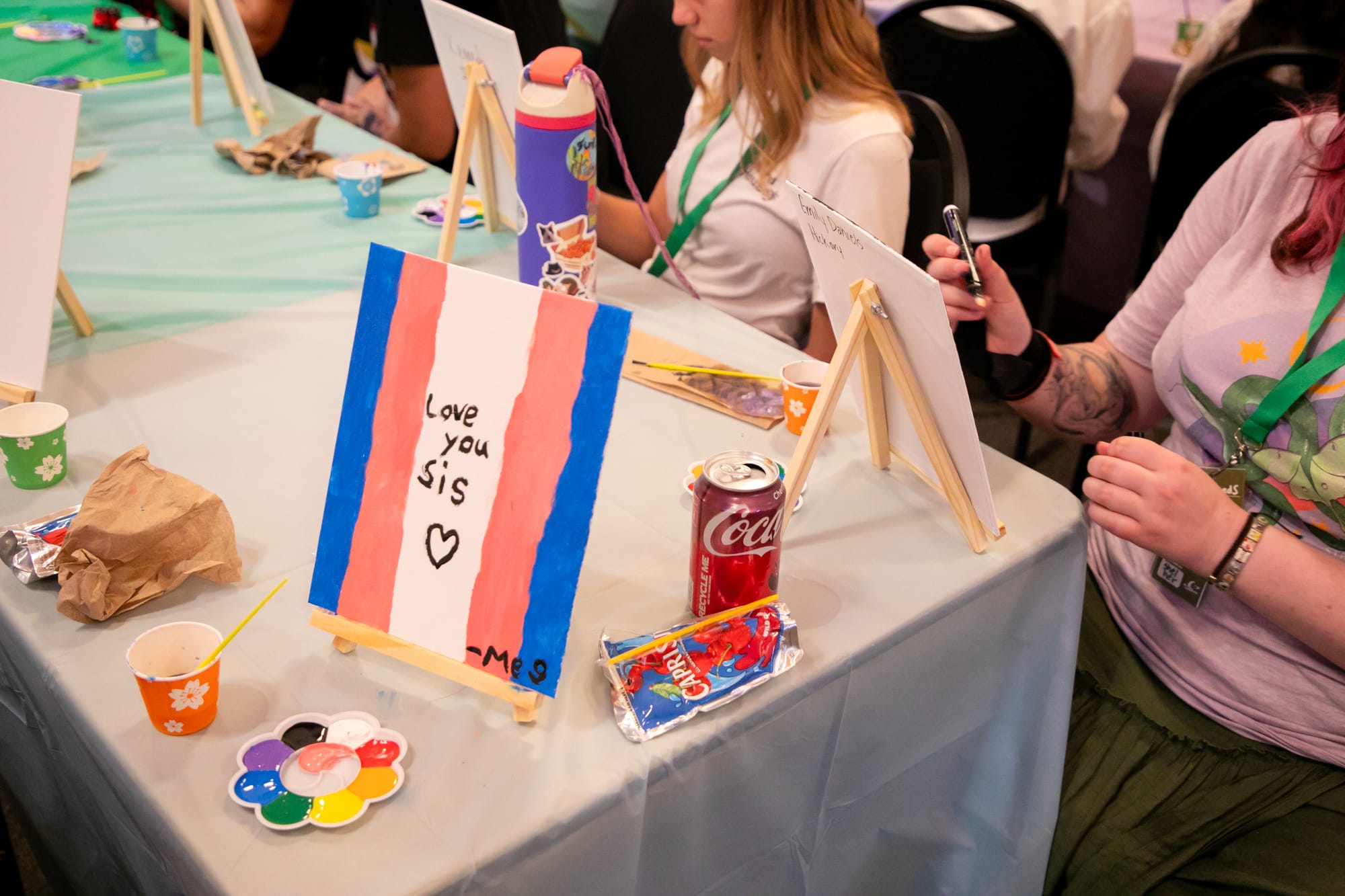
Like any good summer camp, there is plenty of room for friendships, activities, and being a little ridiculous. But kin•dom also fills a gap left by traditional summer camps that may not be prepared to accommodate the particular needs of LGBTQIA+ young people. Campers can participate in workshops on LGBTQIA+ history, queer protest songs, mental health and self-care. They can receive a free gender-affirming haircut from a professional Dress Code Project stylist, find a new outfit in the donated “kin•dom closet,” and even tell their own story on the Campfire Chat podcast.
The organization also works to make camp accessible for young people who need additional support. Last summer, 29% of campers were disabled and 62% identified as neurodivergent or on the autism spectrum. Kin•dom employs occupational therapists and provides dedicated spaces and equipment for campers with special needs. Mental health support is also built into the experience, with Licensed Professional Counselors available to campers 24/7. Last summer, 72% of campers came to kin•dom with diagnosed anxiety and 45% with diagnosed depression.
But Leedy says camp itself is really the vehicle for something bigger. “The heart of kin•dom has never been about summer camp,” he said. “Camp is the vehicle through which our true goal of suicide and self-harm prevention and helping individuals flourish within community is accomplished.” As one camper put it on the organization’s podcast, “kin•dom camp saves lives.”
“I Wish I Had Had a Camp Like This”
Program Director Andy Hackett came up with the original idea for kin•dom camp after seeing a need for a space specifically for LGBTQIA+ young people in Texas. For Leedy, though, one response comes up again and again and reinforces why the space matters. “The number one thing I hear from LGBTQIA+ adults after they learn about kin•dom camp is ‘I wish I had had a camp like this when I was growing up.’”
For kin•dom, part of the mission is giving the next generation what many queer adults didn't have. “We want to give this next generation of LGBTQIA+ teenagers the support and community we never had growing up,” Leedy said. “We want to be the safe and supportive grown-ups that we never had when we were teenagers who will be there to cheer them on and remind them that they are loved and enough.”
That means going beyond simply creating a place where LGBTQIA+ youth are accepted. “We want our campers to feel like a family, that they are actively and intentionally wanted in this community and that this community wouldn't shine as brightly without them,” Leedy said. Kin•dom describes itself as a “camper first” organization, meaning decisions center on campers' experiences. Campers are encouraged to give feedback, and the organization regularly makes substantive changes to its programming based on what they have to say.
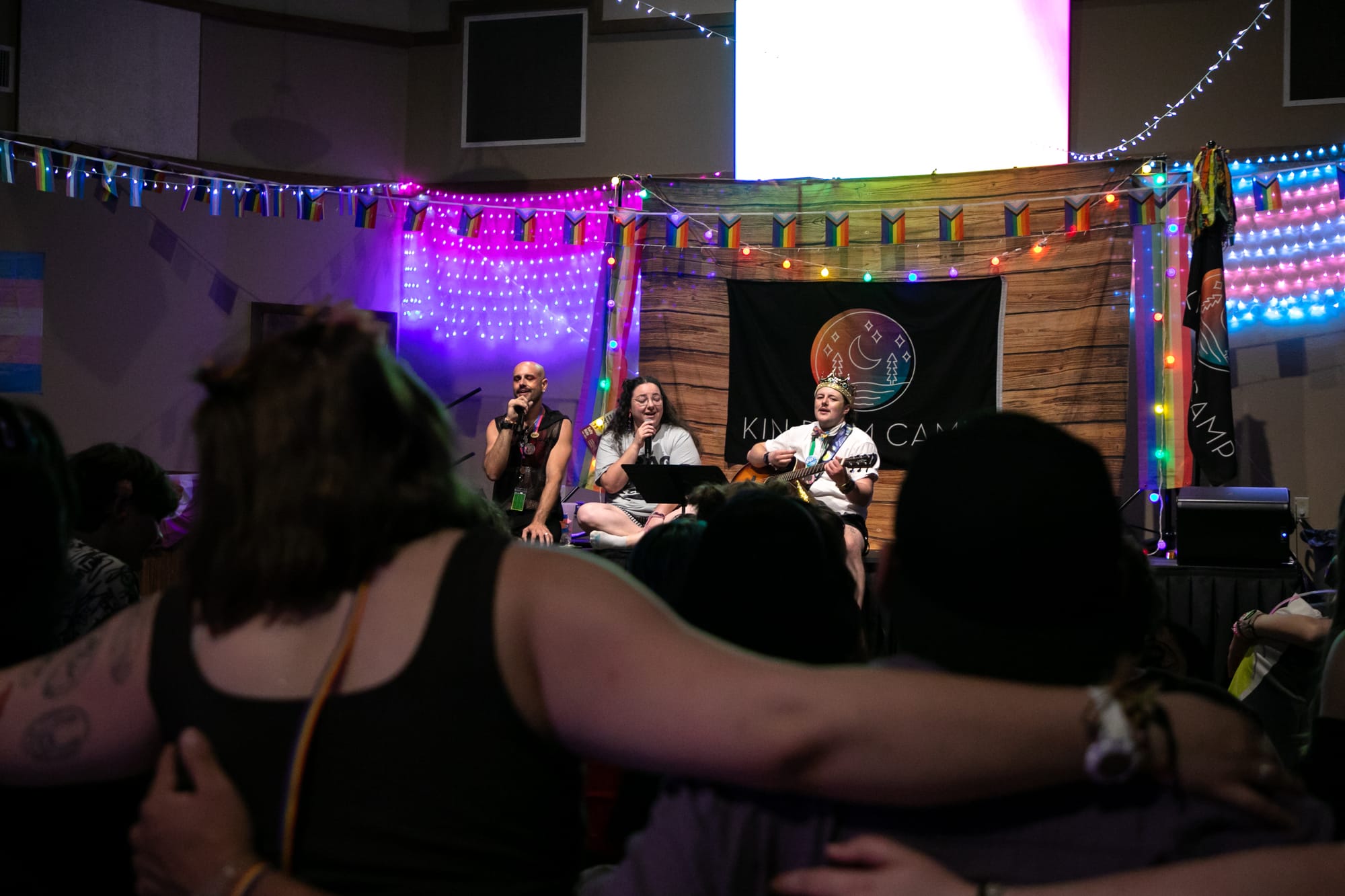
That philosophy also shows up in small but meaningful ways. Before camp begins, staff review the identities campers shared on their registration forms and make sure a Pride flag represents every identity at camp. Each morning, campers can fill out a new name tag, and staff members use whatever name is written there until the camper tells them otherwise. “For many of our trans, non-binary, and gender fluid campers, kin•dom camp is a safe place where they can experiment using different names and pronouns,” Leedy said. “Names are important, and when someone calls a camper by the name they've held inside for so long, that sense of belonging just swells within them.”
Watching the Masks Fall
Leedy works the check-in tables on the first day of camp, giving him a front-row seat to one of the week's biggest transformations. Many campers arrive timid or withdrawn. “You can see them doing the ‘safety math’ in their heads and making sure all the layers of masks are securely in place,” he said. Over the week, they begin meeting other young people—and adults—who identify as they do. They have real conversations about their experiences without worrying about judgment or shame, and they begin moving through their days without constantly questioning whether it is safe to be themselves.
That's when Leedy begins to see a change. “We begin to see those masks fall,” he said. “We see more smiles, more openness, more silliness, and more creative expression. This spirit of freedom washes through the camp, and it honestly feels as close to magic as I've ever experienced.”
Enter: “Whimseymaxxing”
A few summers ago, the kin•dom staff wrestled with how much of their limited week should be devoted to helping campers process the difficult issues LGBTQIA+ young people encounter. With only one week together, they wanted to address the heavy issues and dehumanizing messages campers might face in their everyday lives. Then Creative Director Baylee Yrigoyen offered a reminder: campers already carry that heavy stuff around all year. Camp could be the place where they put it down.
“Since then we've tried to orient our camper experience around the joy of play within community,” Leedy said. This past summer, they gave that philosophy a name: “whimseymaxxing.” It's a spirit of being silly, playing, meeting someone who shares your extremely niche interest, making new friends, and having the same summer camp experiences other kids do. The serious conversations aren't gone, either. Leedy said they tend to arise naturally while campers walk between activities with counselors or sit around talking in their cabins at night.
“We don't have to fix all the challenges they face in the space of a week,” he said. “Instead, we give them space to realize that their lives aren't defined by those challenges and that joy and play are indeed possible.”
Creating a Safe Space in Texas
For kin•dom's Texas campers, creating that freedom requires significant behind-the-scenes work. “Many of our Texas campers come from communities where it is not safe for them to be fully out in their schools and neighborhoods,” Leedy said. That reality has shaped how the organization approaches everything from privacy to security.
Kin•dom doesn't share the location of its Texas camp online and doesn't post front-facing photos of campers. A Canadian company securely stores camper registration data, staff members undergo background checks and intensive training, and the organization works to ensure its camp follows Texas law. Kin•dom also clearly communicates with parents about what their teenagers will experience at camp before they arrive. “We do everything we can to ensure the safety of our campers so they can experience a week where they don't have to be the ones watching over their shoulder the whole time,” Leedy said.
But being based in Texas has shaped more than the practical side of running camp. “Beyond the practical matters of camper safety, being rooted in a state hostile to the LGBTQIA+ community has influenced our mission to be a supportive community that our campers can turn to and rely on when those hard moments come,” Leedy said. While camp remains the organization's flagship program, kin•dom has increasingly focused on making sure that sense of community doesn't disappear when summer ends.
What If This Is the Real World?
Leedy understands the experience personally. He came out later in life, and his first summer at kin•dom was the first year camp was hosted in Texas. He was hired as a cabin counselor, and the experience became his first full week living openly as himself. “As someone who came out later in life, kin•dom was my very first week where I lived my life fully out as who I was,” he said. Being in a queer space where he didn't have to do the same “safety math” he now sees on the faces of arriving campers changed him. “That sense of freedom to simply be—totally changed my life.”
Leedy said he used to talk about the emotional slump that followed camp, when everyone had to leave that environment and return to the “real world.” He's started thinking about that differently. “The more I reflect on that sentiment, the more I realize that kin•dom camp is the real world,” he said, “or at least, a more real version of the world as it should be for everybody.”
The Other 51 Weeks
Of course, summer camp lasts only a week. “The week of camp is this shining experience in the lives of our campers,” Leedy said, but “they still have to navigate the other 51 weeks of the year until the next week of camp begins.” Then, when campers turn 18, they age out of the youth camp program and face another transition. “At kin•dom, we never want to leave our campers adrift out in the world without a lifeline to this community,” he said.
That philosophy has led the organization to create ways for campers to remain connected throughout the year. When Texas banned GSA clubs—student-led LGBTQIA+ support groups—in public schools, kin•dom responded by creating kin•dom club, a secure online, biweekly after-school support group for campers and their peers. The organization also created Young Adult Leadership Training to bridge the two-year gap between when campers age out of the program and when they can apply to return as adult volunteers. Daylong winter gatherings in Austin and Fort Worth provide another opportunity for campers to reconnect in person midway through the year.
“These opportunities are important because they keep campers connected to each other and to their support systems through the daily grind of school and news cycles,” Leedy said. Sometimes, simply knowing that community is still there can make a difference. “Just knowing that you have somewhere to go throughout the year where people will love you and support you no matter what is often enough to calm anxieties and provide enough hope to get through another day.”
For kin•dom, the goal isn't really to create an escape from the world. It's to show young people what the world can feel like when they don't have to explain themselves, minimize themselves, or calculate whether it's safe to simply exist. It's a place where they can arrive and see their flag hanging, write a different name on their tag tomorrow if they want to, find someone who loves the same weird thing they do, laugh, play, and take off some of those masks. Most importantly, they get to belong.
Help Create a Place to Belong
Want to help make kin•dom possible for the next camper? Volunteer applications for summer camp typically open in November, and the organization also welcomes in-kind donations. Running camp requires everything from sensory-safe foods and first aid supplies to arts and crafts materials and items for campers' “Welcome to Camp” backpacks. Kin•dom typically releases an Amazon wish list each April for people who want to provide needed supplies directly.
Financial contributions support camper scholarships, stipends for mental health providers and the medical team, camp programming and the year-round resources that keep young people connected long after summer ends. Kin•dom operates with a small, part-time remote staff, which Leedy said helps the organization keep administrative overhead low and direct as much funding as possible toward supporting campers.
Volunteer, donate, or simply help more people discover a community where LGBTQIA+ young people aren't just accepted—they belong. Learn more about kin•dom community and its programs at kindomcommunity.org or make a tax-deductible gift at kindomcommunity.org/donate. Organizations interested in corporate sponsorships or faith communities interested in giving can contact Dr. John Leedy at john@kindomcommunity.org.